Abstract:
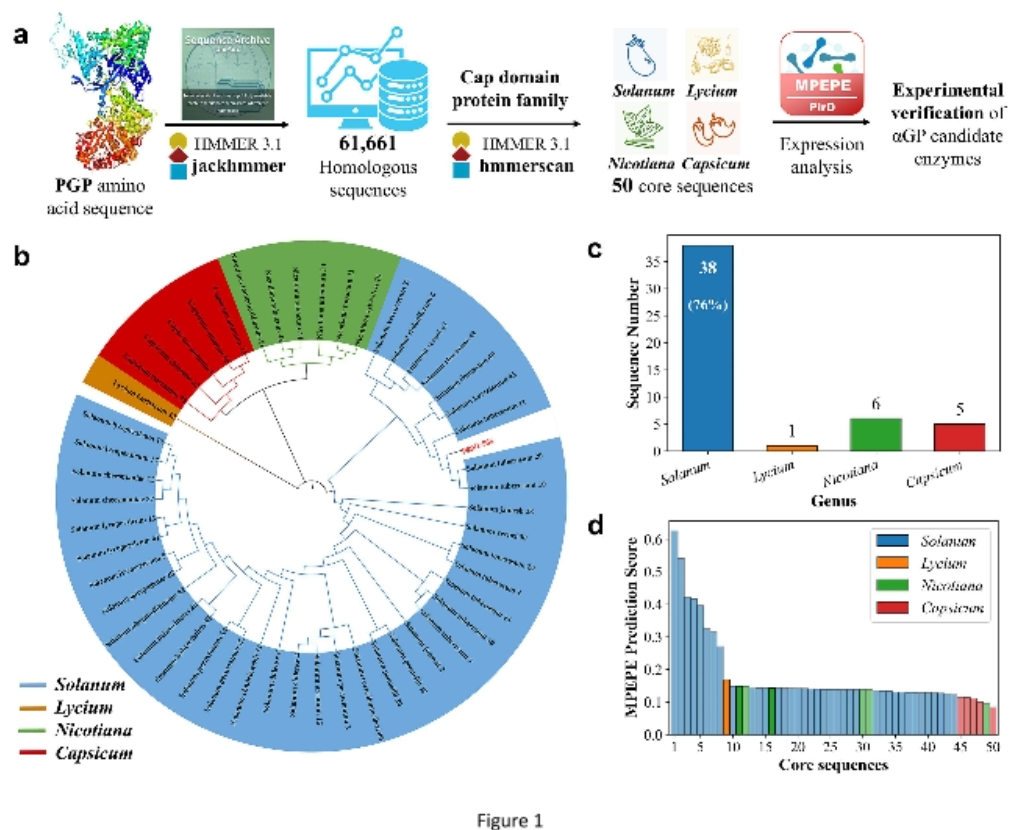
Addressing global food insecurity requires sustainable alternatives to traditional agriculture. Converting agricultural residues such as corn stover into artificial starch and single-cell protein (SCP) represents a promising solution, while industrial deployment remains hindered by low products yield and high costs associated with key enzymes like α-glucan phosphorylase (αGP). This study aimed to address these challenges through intelligent mining and engineering of αGP and systematic bioprocess parameters optimization. Five novel αGP candidates (NaGP, LbGP, CbGP, NtGP and CaGP) with a critical CAP domain and high predicted expression propensity were selected, and NtGP exhibited superior expression and starch synthetic activity. Examination of the CAP domain highlighted 9 mutation sites in NtGP, indicating their role in starch synthesis. Specifically, the mutation within the CAP domain was shown to affect starch synthesis, with the N563T mutant displaying a 1.23-fold improvement in activity relative to the wild-type enzyme. Concurrently, a thermotolerant Candida utilis chassis capable of growing at elevated temperatures and utilizing both glucose and xylose was used for SCP production in the optimized reaction system. The synergistic strategy nearly doubled the starch yield compared to previously reported techniques, produced 5.95 g/L starch and 5.79 g/L SCP from 40 g/L pretreated corn stover. This work presents a novel strategy to improve the efficiency of agricultural waste bioconversion, addressing critical challenges in sustainable food and feed production.
Key Words:
Food security; Corn stover; Artificial starch; Microbial protein; Sustainable agriculture
|