Abstract:
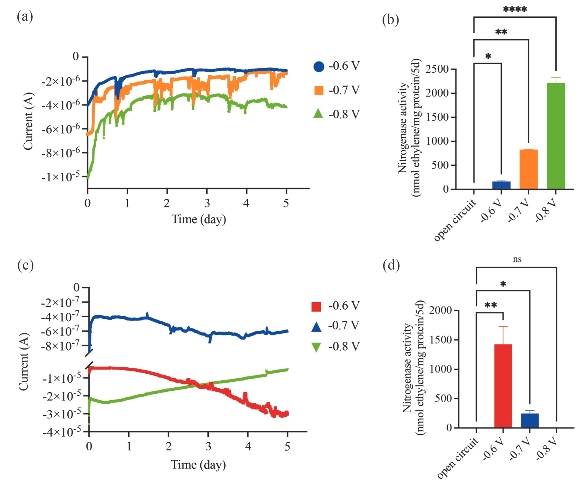
The major challenges to the large-scale application of biological nitrogen fixation are its high energy demand and the acute oxygen sensitivity of nitrogenase. Bioelectrochemical nitrogen fixation (e-BNF) presents a promising strategy to circumvent these energetic constraints, however, extant e-BNF systems, largely restricted to anaerobic or microaerobic conditions, remain unable to reconcile efficient nitrogen fixation with high-density cell cultivation and industrial aerobic fermentation. Herein, a novel aerobic e-BNF system was developed, which elicited significant enhancements in nitrogen fixation performance of Azotobacter vinelandii under aerobic conditions with sucrose as the sole carbon source: biomass and ammonium yield increased by 2.73- and 9.36-fold,respectively. Mechanistic investigations revealed that exogenous electricity specifically activated the Mo‒Fenitrogenase system, orchestrated through extensive metabolic reprogramming and augmented oxidative phosphorylation.A dual electron transfer mechanism was identified—primarily reinforcing the Rnf1–NifF pathway (>90% activity) with a newly discovered alternative electron transfer bypass restoring ~ 9.3% activity.
Key Words:
Electro-driven,biological nitrogen fixation,Azotobacter vinelandii
|